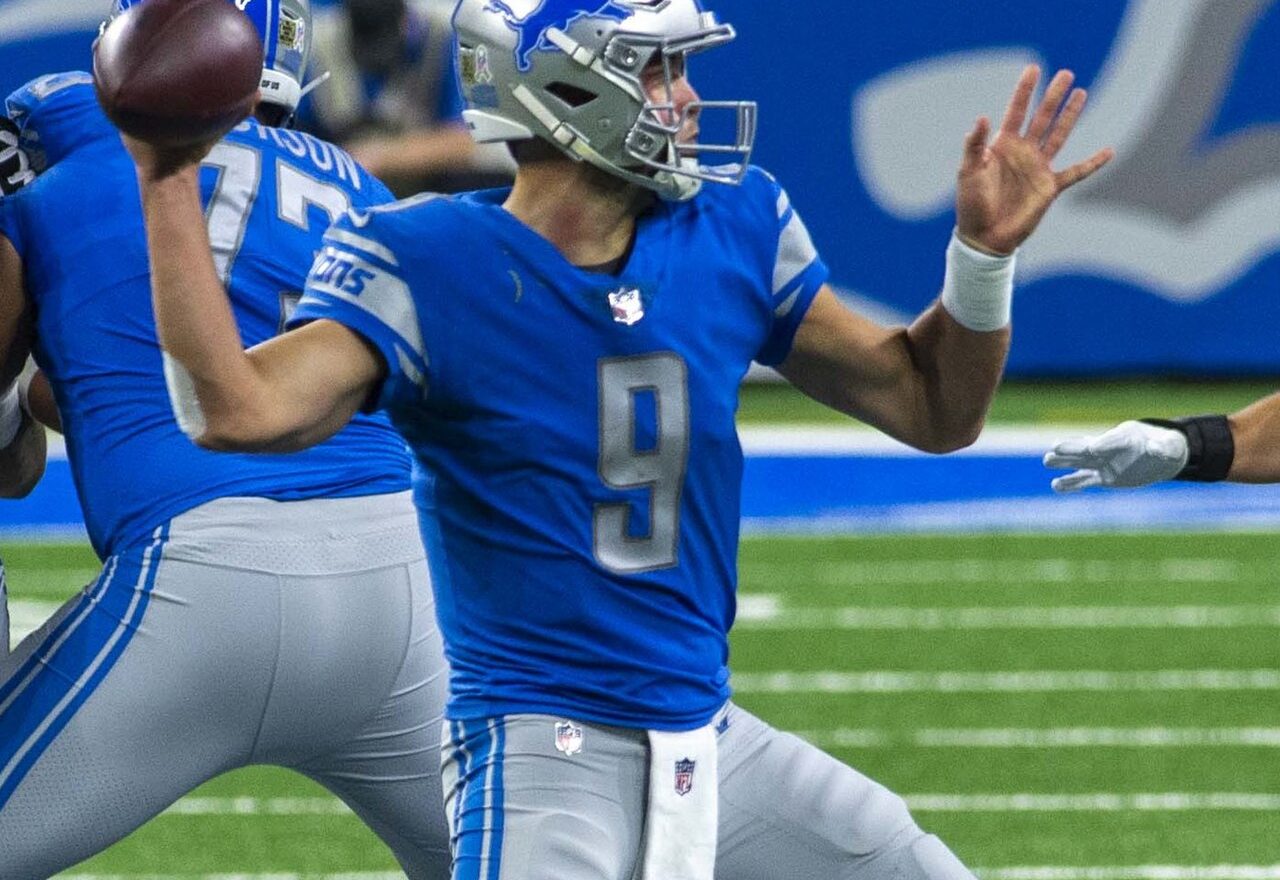
A 41-yard strike to Cooper Kupp helped finish the drive everyone remembers. It was late in Super Bowl LVI, the Rams needed points, and Matthew Stafford did what he has done for most of his football life: trust his arm, push the ball downfield and stay calm when the game tightened.
From Tampa to Dallas
John Matthew Stafford was born on February 7, 1988, in Tampa, Florida, and grew up in Dallas, where he became one of the country’s most watched quarterback prospects at Highland Park High School.
By the time he was a senior, the attention made sense. Stafford led Highland Park to a 15-0 record and a Texas state title in 2005, then finished as one of the top recruits in the 2006 class. Recruiting services widely rated him as a five-star prospect and one of the best pro-style quarterbacks in the nation.
There was athletic range behind the quarterback profile. He played baseball, too, and was a teammate of future major league pitcher Clayton Kershaw. Stories about Stafford’s arm strength started early; reports from his school years often pointed to how hard he could throw a baseball as well as a football. That crossover mattered. The easy velocity that later defined his NFL game did not appear out of nowhere.
Georgia: big arm, fast rise
Stafford stayed in the SEC and went to Georgia, where he played from 2006 through 2008. He did not spend long waiting his turn. As a true freshman, he became Georgia’s starting quarterback, a sign that the raw talent was already hard to keep off the field.
His college career was productive rather than spotless, which is part of why scouts remained so interested. The arm talent was obvious, but so was the room for growth. By his final season in Athens, the balance had shifted more clearly toward polish. In 2008, he threw 25 touchdown passes, setting a Georgia single-season record at the time, and helped lead the Bulldogs to a Capital One Bowl win over Michigan State. He was named the game’s MVP.
One detail from the original version needed correcting: Stafford was not a first-team All-American in 2008. He did, however, leave Georgia as one of the top quarterbacks in the draft class, and that was the point that mattered most for what came next.
Detroit takes him first overall
The Lions made Stafford the No. 1 pick in the 2009 NFL Draft, handing him the hardest kind of assignment for a young quarterback: revive a struggling franchise while learning on the job.
His rookie season was uneven and physically punishing, but it also produced one of the enduring images of his career. Against Cleveland, Stafford separated his shoulder, stayed in the game for one final snap and threw the winning touchdown. It was a small moment in a losing season, yet it captured something essential about him. Toughness would become part of the story almost as much as the passing numbers.
Detroit did not become a winner overnight, and Stafford’s early years were interrupted by injuries. Then came 2011, the season that changed the scale of his career. He threw for 5,038 yards and 41 touchdowns, joining the short list of quarterbacks with a 5,000-yard season and helping the Lions reach the playoffs. He was named NFL Comeback Player of the Year by the Pro Football Writers of America, a common point of confusion because there is no official AP Comeback Player award on his résumé for that season.
In the wild-card loss to New Orleans, he threw for 380 yards and three touchdowns and also ran for a score. Detroit lost, but Stafford looked fully established as a high-volume NFL passer.
Big numbers, close games, and a long Detroit run
The middle of his Lions career was defined by two things happening at once. The team often struggled to build a complete contender, and Stafford kept piling up production anyway.
In 2012, he set an NFL single-season record with 727 pass attempts. In 2014, he made the Pro Bowl for the first time. In 2016, he became one of the league’s defining late-game quarterbacks, tying the NFL single-season record with eight fourth-quarter comebacks and eight game-winning drives. Those numbers fit the eye test. Detroit games often seemed to reach the final minutes still undecided, and Stafford kept giving the Lions a chance.
He also climbed the career yardage ladder at unusual speed, becoming the fastest player at the time to reach 20,000, 30,000 and 40,000 passing yards. The 45,000-yard mark later followed in the same record-setting fashion.
Some claims from the original draft needed trimming or correction. Stafford did not spend his Detroit years as the franchise leader in passing touchdowns with only 187; that total was too low for his full Lions tenure. In fact, across 12 seasons with Detroit from 2009 through 2020, he threw for 45,109 yards and 282 touchdowns, both franchise records when he left. Those numbers better reflect what his time there actually was: not just productive, but historically productive for the Lions.
By the end, though, the fit had run its course. Stafford had put up elite volume, played through injuries and authored plenty of comeback wins, but Detroit had not advanced to the level both sides wanted. In early 2021, the Lions traded him to the Los Angeles Rams.
A fresh start in Los Angeles
Sometimes a change of team looks logical on paper and awkward on the field. This one clicked quickly.
In his first season with Sean McVay, Stafford threw for 4,886 yards and 41 touchdowns. The Rams asked him to be aggressive, to attack windows rather than avoid them, and the partnership suited him. Los Angeles finished 12-5, won the NFC West and entered the playoffs with a quarterback whose résumé was full of yardage but still missing the January run that tends to shape reputations.
He answered that in one postseason.
Stafford beat Arizona for his first playoff victory, then threw for 366 yards and two touchdowns against Tampa Bay in the divisional round, adding a rushing score. In the NFC Championship Game against San Francisco, he passed for 337 yards and two touchdowns. Then came Super Bowl LVI against Cincinnati.
The Rams won 23-20. Stafford threw for 283 yards and three touchdowns, and his late drive to the winning score became the signature sequence of his career. For years, discussion around him had included what he had not done in the postseason. That night changed the frame. He was now a Super Bowl-winning quarterback.
The years after the title
The seasons after the championship were less smooth. Injuries disrupted 2022, and the Rams fell sharply from their title year. Stafford dealt with elbow and spinal cord contusion issues and played in only nine games.
He returned in 2023 and looked more like himself, throwing for 3,965 yards and 24 touchdowns in 15 games while helping the Rams back into the playoffs. He earned another Pro Bowl nod for that season. The numbers were not as loud as his peak years in Detroit or his first Rams season, but they showed the same core traits: willingness to challenge defenses, comfort in high-volume passing games and enough command to keep an offense on schedule.
Because the source text included claims extending into future seasons, those needed to be removed. Statements such as “as of the 2025 season” or “by Week 2 of the 2026 season” are not appropriate here without a verified, current source base. The same goes for the claim that he won NFL MVP in 2025; that is not an established fact and should not be presented as one.
How Matthew Stafford plays
Stafford has never been hard to identify on tape. The arm strength is the first thing people notice, but not the last. He can drive throws outside the numbers, throw with touch down the seam and attack deep without needing a perfect platform.
What has made him last, though, is more than velocity. He has long been comfortable in crowded pockets and willing to take hits to complete throws. His teams have also leaned on him heavily in late-game situations. That helps explain why fourth-quarter comebacks and game-winning drives are such a large part of his statistical profile.
There is risk in his style, too. Quarterbacks who challenge tight windows will throw interceptions, and Stafford has had seasons where the line between aggressive and careless got thin. But that same mentality is also why coaches have trusted him to carry large chunks of an offense. He is at his best when a game asks him to keep throwing rather than hide.
Life away from football
Off the field, Stafford’s public life is closely tied to his family. He is married to Kelly Stafford, and the couple have four daughters. Kelly has spoken publicly about her own health battle after being diagnosed with a brain tumor, and the family’s openness during that period gave fans a more personal view of the quarterback’s home life.
Stafford has generally kept a lower profile than many star quarterbacks, but a few details from earlier years still follow him. The Clayton Kershaw connection remains one of the more memorable side notes from his school days, and the baseball background still feels relevant when people talk about his arm talent.
As for where he lives, reports have linked the family to Hidden Hills, California. That kind of real-estate detail should be treated carefully, so it is best framed as reported rather than stated as a fixed fact.
FAQ
How many Super Bowls has Matthew Stafford won?
One. He won Super Bowl LVI with the Los Angeles Rams.
What college did Matthew Stafford attend?
He played college football at the University of Georgia.
Which NFL teams has Matthew Stafford played for?
He has played for the Detroit Lions and the Los Angeles Rams.
Was Matthew Stafford the first overall pick?
Yes. Detroit selected him No. 1 overall in the 2009 NFL Draft.
Is Matthew Stafford married?
Yes. He is married to Kelly Stafford, and they have four daughters.
What is Matthew Stafford known for as a quarterback?
He is known for arm strength, high passing volume, late-game comebacks and a willingness to attack tight throwing windows.
Photo: All-Pro Reels from District of Columbia, USA, CC BY-SA 2.0, via Wikimedia Commons