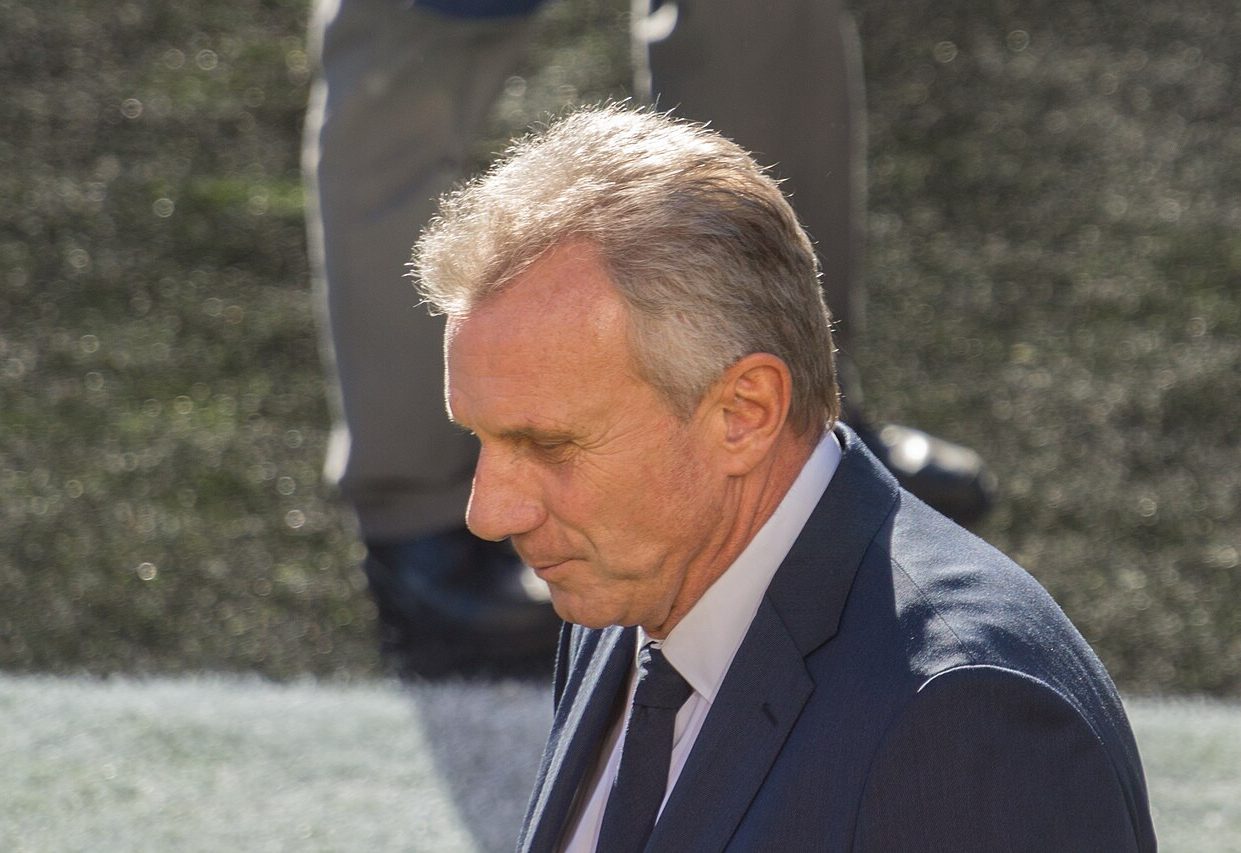
Four Super Bowl rings, three Super Bowl MVP awards, and a reputation that somehow grew even larger in the final two minutes. Joe Montana’s career is easy to reduce to trophies, but that misses the feel of it: the stillness in the huddle, the quick release, the sense that chaos around him rarely changed his pulse.
From western Pennsylvania to Notre Dame
Joseph Clifford Montana Jr. was born on June 11, 1956, in New Eagle, Pennsylvania, and grew up in nearby Monongahela. He attended Ringgold High School, where football and basketball both mattered in his development.
One family story has followed him for years: according to widely repeated accounts, his father altered his birth certificate so he could play youth football earlier than the rules allowed. Whether told as folklore or family history, it fits the larger truth. Football entered Montana’s life early, and it stayed there.
He was not only a quarterback prospect. Montana also drew serious attention in basketball and reportedly received scholarship interest from North Carolina State. Instead, he chose Notre Dame, a decision that placed him in one of college football’s brightest spotlights.
Notre Dame and the beginnings of the comeback reputation
Montana arrived at Notre Dame in the mid-1970s and played for the Irish from 1974 through 1978. His college career did not unfold in a straight line. He dealt with injuries, competition for the starting job, and stretches when he had to wait for his chance. That uneven path turned out to be useful preparation.
By the time Notre Dame won the national championship in the 1977 season, Montana had become a central figure in the offense. He was not yet the polished NFL star he would become, but the outline was there: accuracy, calm, and a knack for functioning well when games turned messy.
His college legend is tied most closely to comeback moments, especially the famous 1979 Cotton Bowl played at the end of the 1978 season, when he helped rally Notre Dame past Houston despite battling illness and frigid conditions. The details of that game have become part of football lore, but the larger point is simpler. Long before the NFL knew him as Joe Cool, teammates and opponents had already seen how steady he stayed under stress.
Draft day and a modest NFL arrival
The San Francisco 49ers did not take Montana at the top of the board. They selected him in the third round of the 1979 NFL Draft, 82nd overall, a reminder that even future Hall of Fame quarterbacks do not always arrive with franchise-savior billing.
His early contract reflected that status more than his eventual legacy. Montana signed with San Francisco and entered a team that was still trying to find its footing. He wore No. 16 with the 49ers, and over time that number became inseparable from one of the league’s defining dynasties.
The timing mattered. Bill Walsh was building an offense based on rhythm, timing, and precision, and Montana proved to be an ideal fit. He was not a quarterback who overwhelmed defenses with size or theatrics. He won with anticipation, touch, and an unusual ability to make difficult moments look routine.
The 49ers years and the rise of Joe Cool
Montana played for San Francisco from 1979 through 1992, though injuries limited him heavily in his final two seasons there. In 158 regular-season games with the 49ers, he threw for 35,124 yards, 244 touchdowns, and 123 interceptions.
The breakthrough image came in the 1981 NFC Championship Game against the Dallas Cowboys. Late in the game, Montana rolled right and lofted a pass to Dwight Clark in the back of the end zone. “The Catch” became more than a game-winning touchdown. It marked the arrival of the 49ers as a power and gave Montana one of the signature plays of NFL history.
From there, the championships followed.
He led San Francisco to wins in Super Bowls XVI, XIX, XXIII, and XXIV. He was named Super Bowl MVP in XVI, XIX, and XXIV, becoming the first player to win that award three times. In those games, what stood out was not just production but control. Montana never threw an interception in a Super Bowl, and his career Super Bowl passer rating of 127.8 remains the highest among quarterbacks with multiple appearances.
The drive most often used to explain his nickname came in Super Bowl XXIII. With the 49ers trailing late against Cincinnati, Montana led a 92-yard touchdown drive that ended with his pass to John Taylor. The image from that sequence is almost as famous as the throw itself: Montana in the huddle, relaxed enough to point out actor John Candy in the stands. That blend of tension and calm helped define the Joe Montana story as much as any stat line.
His peak years brought individual honors too. He was NFL MVP in 1989 and 1990, first-team All-Pro in 1987, 1989, and 1990, and a Pro Bowl selection eight times. In 1989, he also won AP Offensive Player of the Year.
Numbers, records, and what made him different
Across his full NFL career, Montana played 192 regular-season games and finished with 40,551 passing yards, 273 touchdown passes, 139 interceptions, a 63.2 completion percentage, and a 92.3 passer rating. He also ran for 1,676 yards and 20 touchdowns.
Those totals are strong, but they do not fully explain why he remains such a central figure in football history. Montana’s game was built on timing and decision-making. He processed quickly, threw accurately to all levels, and rarely looked hurried even when protection broke down. He was mobile enough to escape pressure, but his real gift was what happened after the escape: eyes still downfield, feet under control, throw delivered on time.
His postseason résumé is where the profile sharpens. Montana went 16-7 in the playoffs and threw 45 postseason touchdown passes, an NFL record at the time of his retirement. He also set a playoff record with six career 300-yard passing games, another marker of how often his best football showed up in January.
He was credited with 31 fourth-quarter comebacks in the regular season, and that figure fits the broader picture. The “Comeback Kid” label was not built on one or two famous drives. It followed him from college into the pros because he kept doing the same thing: settling games when they tightened.
Injuries, Steve Young, and the move to Kansas City
The final San Francisco chapter was more complicated than the championship years. Montana suffered a serious elbow injury in the 1990 NFC Championship Game, then missed almost all of the next two seasons. During that stretch, Steve Young took over and played at an MVP level.
That created one of the most delicate transitions of the era. Montana was still a star, still a franchise icon, but the 49ers had another elite quarterback ready to lead. In 1993, San Francisco traded Montana to the Kansas City Chiefs.
His time with the Chiefs lasted only two seasons, but it was far from ceremonial. Wearing No. 19, he gave Kansas City credibility and late-game poise right away. In the 1993 season, he led the Chiefs to an 11-5 record and then to the AFC Championship Game, winning playoff games against the Steelers and Oilers along the way.
Montana played 25 regular-season games for Kansas City and threw for 5,427 yards, 42 touchdowns, and 17 interceptions. He made the Pro Bowl in 1993, a fitting nod to the fact that even in the final stage of his career, he could still command a contender.
He retired on April 18, 1995.
Honors that lasted well beyond retirement
By the time his playing days ended, Montana had already secured his place among the game’s most decorated quarterbacks. He was named to the NFL 1980s All-Decade Team, the NFL 75th Anniversary All-Time Team, and the NFL 100th Anniversary All-Time Team.
In 2000, he was inducted into the Pro Football Hall of Fame.
San Francisco later retired his No. 16, an expected tribute for a player who helped turn the 49ers into one of the league’s model franchises. For many fans, the name still works as shorthand for a certain style of quarterback play: efficient, poised, and ruthless in big moments without ever looking theatrical.
Joe Montana off the field
Away from football, Montana has kept a public profile without turning every detail of his private life into a performance. He is married to Jennifer Wallace, and they have four children.
His post-playing career has included business, endorsements, and philanthropy. Montana is a co-founder and managing partner of Liquid 2 Ventures, a venture capital firm that has been linked to investments in companies such as GitLab, Pinterest, Robinhood, Airbnb, and NerdWallet. He has also been involved in wine ventures under the Montagia name.
Like many former superstars, he has remained marketable long after retirement. Over the years, his endorsement work has included major national brands such as Nike, Gatorade, Pepsi, Mastercard, AT&T, and Skechers. Reported estimates of Joe Montana net worth vary by outlet, so any single figure should be treated as an estimate rather than a fixed fact.
Charitable work has been part of that public life as well. Montana and his wife have supported youth-focused causes in the Bay Area through the Four Rings Montana Foundation, and he has been connected to organizations including Boys & Girls Clubs of America, Feeding America, and Make-A-Wish.
There are also smaller details that round out the portrait. Montana’s old basketball pedigree has never quite left his story, because it reminds people he was a broader athlete than the classic pocket-passer stereotype suggests. And in retirement, he has often come across much as he did on the field: measured, low-key, and comfortable letting the résumé speak first.
FAQ
How many Super Bowls did Joe Montana win?
He won four, all with the San Francisco 49ers: Super Bowls XVI, XIX, XXIII, and XXIV.
What teams did Joe Montana play for?
He played for the San Francisco 49ers and the Kansas City Chiefs.
When was Joe Montana drafted?
The 49ers selected him in the third round of the 1979 NFL Draft with the 82nd overall pick.
When was Joe Montana inducted into the Hall of Fame?
He entered the Pro Football Hall of Fame in 2000.
Why was Joe Montana called Joe Cool?
The nickname came from his calm, composed play in high-pressure moments, especially in late-game and postseason situations.
What college did Joe Montana attend?
He played college football at Notre Dame.
Photo: Arnie Papp, CC BY 2.0, via Wikimedia Commons