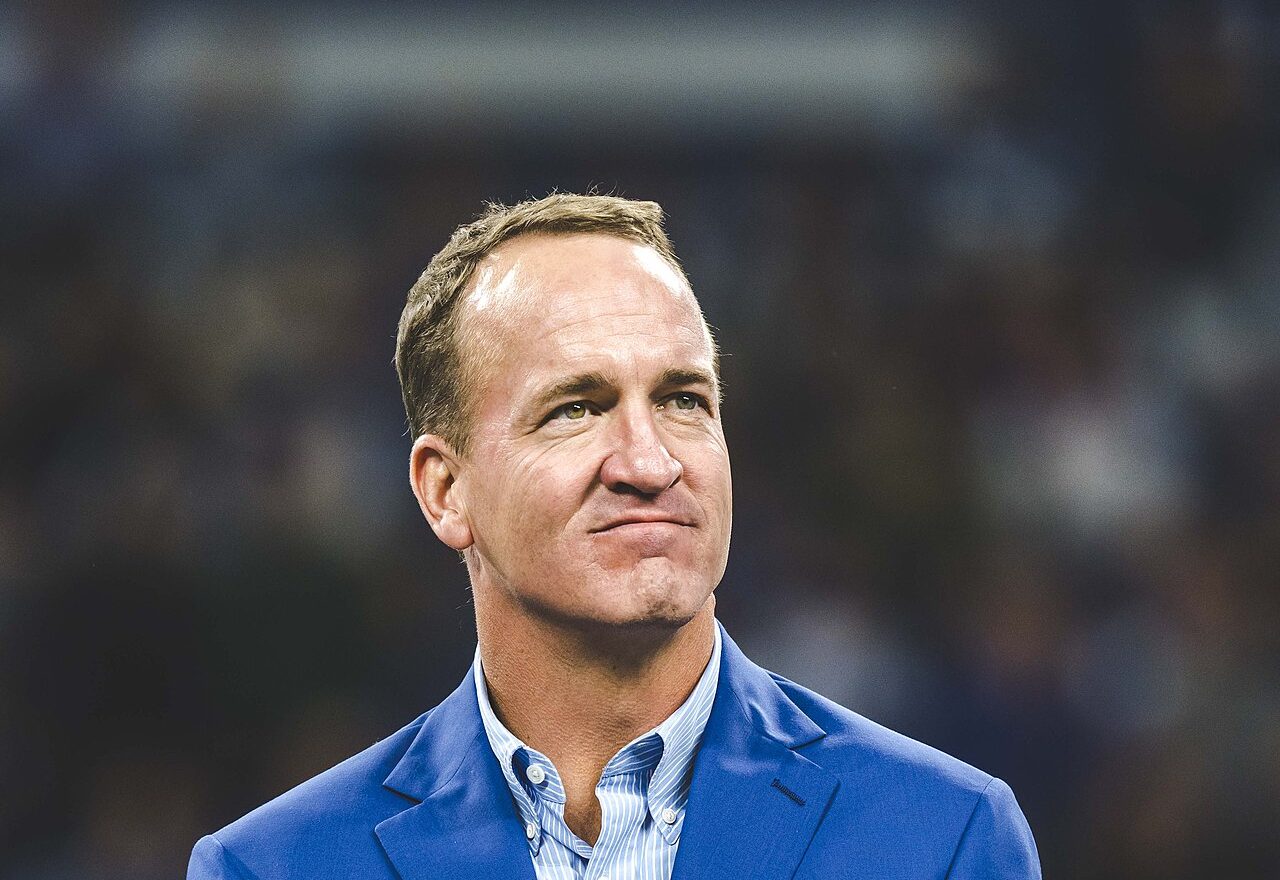
Three numbers still frame Peyton Manning’s NFL life: five MVP awards, two Super Bowl rings, and one of the most recognizable pre-snap routines the league has ever seen. Before the snap, he was often already dictating the play. By the time he retired, he had turned that command into one of the most accomplished quarterback careers in football history.
New Orleans roots and a football family
Peyton Williams Manning was born on March 24, 1976, in New Orleans, Louisiana. Football was part of the household long before he became famous. His father, Archie Manning, had played quarterback in the NFL, and his brothers, Cooper and Eli, kept the sport at the center of family life as well.
One family detail followed him all the way into the pros. Manning wore No. 18 in part as a tribute to Cooper, whose own playing career ended because of spinal stenosis. It fit a family story that was already well known in football circles, but Peyton’s path never felt like a simple inheritance. He was expected to be good. He still had to become his own player.
At Isidore Newman School in New Orleans, he did that quickly. Manning started for three seasons and led the program to a 34-5 record. He threw for 7,207 yards and 92 touchdowns, production that made him one of the country’s most closely watched high school quarterbacks.
Given Archie Manning’s history at Ole Miss, that school seemed like the obvious destination from the outside. Instead, Peyton chose Tennessee, a decision that gave his career its own shape early.
Tennessee, where the profile sharpened
Manning played at Tennessee from 1994 through 1997 and left as one of the most accomplished quarterbacks in school history. He passed for 11,201 yards and 89 touchdowns, and Tennessee went 39-6 in games he started.
His senior season brought the biggest wave of recognition. In 1997, Tennessee won the SEC championship, and Manning collected the Maxwell Award, the Davey O’Brien Award and the Johnny Unitas Golden Arm Award. He finished second to Charles Woodson in the Heisman Trophy voting, a result that remained part of his college story for years.
What stood out even then was not just production. It was the way he played. Manning’s reputation for preparation, command and detail was already taking shape in Knoxville. He completed his degree in speech communication in three years, and he was elected to Phi Beta Kappa. Later, a street near Neyland Stadium was renamed Peyton Manning Pass, a small but telling marker of how deeply he was tied to the program.
The Colts make him the No. 1 pick
The Indianapolis Colts selected Manning with the first overall pick in the 1998 NFL Draft, choosing him over Washington State quarterback Ryan Leaf in one of the most discussed draft decisions of that era. Indianapolis was handing him the franchise, and for more than a decade he justified that trust.
His rookie year was productive and rough around the edges in a way that now looks almost useful. Manning threw for 3,739 yards and 26 touchdowns, both rookie records at the time, but he also led the league with 28 interceptions. The full picture mattered. He was aggressive, he learned quickly, and the Colts had their quarterback.
From there, the climb was steady and then relentless. Manning made the Pro Bowl 14 times: 1999, 2000, 2002 through 2010, and 2012 through 2014. He was a first-team All-Pro seven times and a second-team All-Pro three times. More importantly for Indianapolis, he turned the Colts into a perennial contender.
The numbers piled up because the offense ran through him in a very specific way. He was not just throwing passes; he was organizing the entire structure of the game at the line of scrimmage. That became his signature. Defenses had to deal with his arm, but also with his recognition, tempo and ability to get the offense into the right play before the ball was snapped.
Indianapolis also committed to him financially, first with a six-year rookie contract worth about $46.3 million in 1998, then with a seven-year extension worth about $98 million in 2004.
MVP seasons and the breakthrough in Indianapolis
By the middle of the 2000s, Manning was at the center of the league. He won NFL MVP in 2003, 2004, 2008, 2009 and 2013, still the most by any player. He was also named NFL Offensive Player of the Year in 2004 and 2013.
The 2004 season remains one of the clearest snapshots of his peak. Manning threw 49 touchdown passes, then an NFL single-season record, while leading one of the most efficient passing attacks the sport had seen. It was a season built on timing, anticipation and complete command.
For all the regular-season success, though, the biggest Colts moment came in the playoffs after the 2006 season. In the AFC Championship Game against New England, Indianapolis fell behind 21-3. Manning kept the offense moving, the deficit shrank, and the Colts came back to win 38-34 in one of the defining postseason victories of his career.
Two weeks later, Indianapolis beat the Chicago Bears in Super Bowl XLI. Manning was named Super Bowl MVP, giving him both his first championship and the postseason validation that had followed him for years.
The Colts returned to the Super Bowl after the 2009 season, but lost Super Bowl XLIV to the New Orleans Saints. Even with that defeat, Manning’s Indianapolis run had already become one of the most important quarterback eras any franchise has had. He played 13 seasons for the Colts, missed the 2011 season with a neck injury, and was released in March 2012. The franchise later retired his No. 18 jersey and unveiled a statue outside Lucas Oil Stadium.
Neck surgeries, a fresh start, and Denver’s gamble
The turning point of Manning’s career came not with a draft pick or a trophy, but with his neck. He underwent multiple neck procedures, including spinal fusion surgery, and missed the entire 2011 season. For the first time, there was real uncertainty about whether he could return at a high level.
Denver decided to bet on him anyway.
Manning signed with the Broncos in 2012, and the move produced one of the most successful second acts in NFL history. In his first season there, he threw for 4,659 yards and 37 touchdowns, led Denver to a 13-3 record, and won NFL Comeback Player of the Year.
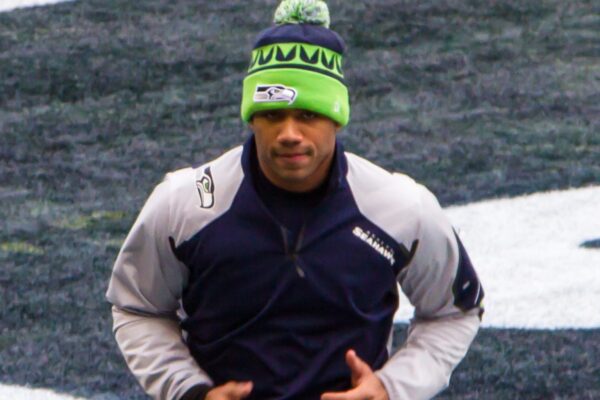
Then came 2013, a season that still sits near the top of any search for Peyton Manning stats. He set NFL single-season records with 5,477 passing yards and 55 touchdown passes, and he won his fifth MVP award. Denver reached Super Bowl XLVIII, where the Broncos lost to the Seattle Seahawks, but Manning’s individual season was historic regardless of the ending.
He remained productive in 2014, though the Broncos again fell short in the playoffs. By 2015, age and injury had clearly narrowed what he could do physically. He missed time, threw more interceptions than usual, and no longer looked like the quarterback who had lit up the league two years earlier. But Denver had an elite defense, and Manning still had enough command to help guide the team through the postseason.
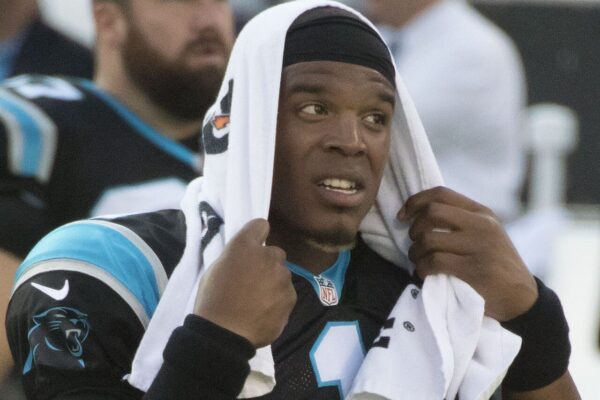
The Broncos beat the Carolina Panthers in Super Bowl 50, giving Manning his second title. He became the first starting quarterback to win a Super Bowl with two different franchises. At 39 years, 320 days old, he was also the oldest starting quarterback to win a Super Bowl at that time.
After the season, he retired.
The final numbers and what they meant
When Manning walked away, his career totals were massive: 71,940 passing yards, 539 touchdown passes, 251 interceptions, and a 65.3 completion percentage on 6,125 completions in 9,380 attempts.
His regular-season record as a starting quarterback was 186-79. In the playoffs, he went 14-13 with 7,339 passing yards and 40 touchdown passes. He also finished with 43 fourth-quarter comebacks and 54 game-winning drives.
Some records did not last, which is normal for quarterbacks in a pass-heavy era. But at retirement, he had held the NFL records for career passing yards and career touchdown passes, and his five MVP awards remain unmatched. He was elected to the College Football Hall of Fame in 2017 and the Pro Football Hall of Fame in 2021.
Why his style stood apart
Many great quarterbacks have had stronger arms or more mobility. Manning’s edge was different. He played the position like a coordinator with a helmet on.
His game started before the snap. He studied fronts, adjusted protections, changed routes and manipulated matchups in real time. The famous checks at the line became part of his public image, but they were not theater. They were the operating system of the offense.
That approach also helps explain his consistency. Manning had 14 seasons with at least 4,000 passing yards. He did not depend on improvisation to survive. He depended on recognition, rhythm and precision, and he made those traits look central to modern quarterback play.
Life away from the field
Off the field, Manning built a public profile that stretched well beyond football. He married Ashley Thompson, and together they have twins. He has long remained connected to the Manning Passing Academy, the family-run summer camp that has become a fixture for young quarterbacks and receivers.
His charitable work has been a significant part of his post-football image as well. Manning founded the PeyBack Foundation in 1999 to help disadvantaged youth, and he has also supported the University of Tennessee through the Peyton Manning Scholarship.
In business, he was once a notable Papa John’s franchise owner in the Denver area, reportedly holding stakes in 31 stores before selling them. His endorsement portfolio was extensive over the years, including deals with brands such as Nationwide, DirecTV, Buick, Gatorade and Nike. Forbes reported in 2016 that his total career earnings from salary, endorsements and licensing had reached roughly $400 million.
His public life has not been without controversy, and those details need careful framing.
In 1996, while at Tennessee, trainer Jamie Ann Naughright accused Manning of sexual assault. Manning denied that characterization and said he had been mooning another athlete, while Naughright alleged physical contact. No criminal charges were filed. Naughright later reached a $300,000 settlement with the university. In 2002, she sued Manning for defamation after comments in his book; that case was settled out of court in 2003.
A separate allegation surfaced in reporting during his final NFL season. In December 2015, Al Jazeera America reported that human growth hormone had been shipped to Ashley Manning during Peyton Manning’s recovery from his neck injury. Manning denied the allegation, and after a months-long investigation, the NFL said it found no credible evidence that he had used HGH.
Those episodes are part of the record, but they did not define his football legacy nearly as much as the years of control, production and durability that came before them.
FAQ
How many Super Bowls did Peyton Manning win?
Two. He won Super Bowl XLI with the Colts and Super Bowl 50 with the Broncos.
How many MVPs did Peyton Manning win?
Five. He won NFL MVP in 2003, 2004, 2008, 2009 and 2013.
What college did Peyton Manning attend?
He played at the University of Tennessee.
What position did Peyton Manning play?
Quarterback.
When was Peyton Manning born?
March 24, 1976.
How tall was Peyton Manning?
He was listed at 6-foot-5 during his playing career.
Photo: All-Pro Reels, CC BY-SA 2.0, via Wikimedia Commons